 By
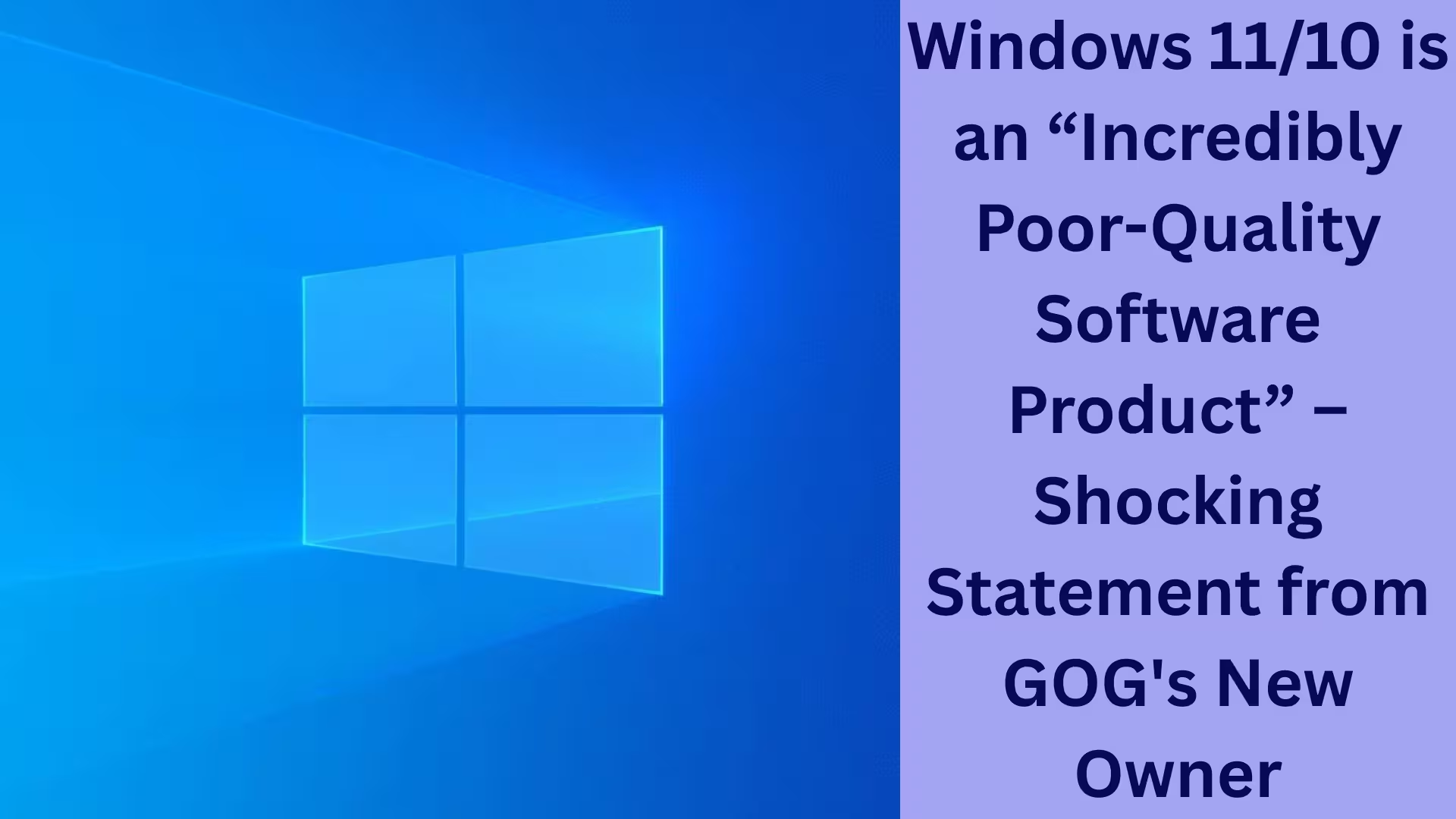
ByThe debate surrounding Windows 11 and Windows 10 in the digital gaming industry and the technology world is nothing new, but when this comment comes from the new owner of a prestigious platform like GOG (Good Old Games), the discussion becomes even more serious. Here, we are deeply analyzing the statement, its context, and its far-reaching implications, which are extremely important not only for Windows users but also for gamers, developers, and tech enthusiasts.
What is GOG, and why is it important?
GOG is a popular digital game storefront known for its DRM-free model. Here, users actually “buy and own” the games, rather than relying on a license. This is what sets GOG apart from Steam and the Epic Games Store.
GOG was founded in 2008 by Michał Kiciński and Marcin Iwiński, who had previously established the giant company CD Projekt in 1994.
Michał Kiciński’s Return and the Complete Acquisition of GOG
After a long absence from the company, Michał Kiciński recently acquired 100% of GOG’s shares. This means that GOG is no longer part of CD Projekt. This change is not limited to the business structure; a clear shift in ideology and technological approach is also evident.
Direct Attack on Windows 11/10 – “Unbelievable… Poor-Quality Software”
In a recent interview with PC Gamer, Michał Kiciński gave a very sharp response regarding Microsoft Windows. In his words, Windows is a software product of “incredibly poor quality.”
He stated:
> “I’m truly surprised that Windows has survived in the market for so many years. It’s a poor-quality software and product, and I can’t believe it.” This statement is particularly significant because it comes not from an average user, but from an experienced leader in the gaming and software industry.
Windows User Experience: Dissatisfaction Stemming from Personal Experience
Although Michał Kiciński himself uses macOS, he occasionally has to fix his parents’ Windows computers. According to him, this experience is incredibly frustrating.
He explicitly stated that fixing Windows systems is still as complex and troublesome today as it was years ago. This is why people are increasingly looking for alternatives to the Windows ecosystem.
Also read: Thunderbird 147 Release: New Features, Important Bug Fixes, and the Future of Thunderbird Pro
Disillusionment with the Windows Ecosystem
We are seeing a large number of users now turning to Windows alternatives. The main reasons for this are:
Performance issues
UI/UX problems
Unwanted updates
Hardware compatibility issues
Privacy and telemetry concerns
All of these problems have consistently surfaced in both Windows 10 and Windows 11.
The Growing Popularity of Linux and the Example of Zorin OS
For users dissatisfied with Windows, Linux has emerged as a strong alternative. Zorin OS, in particular, recently claimed that over 1 million Windows 11 and Windows 10 users have switched to their latest version.
This figure is a clear indication that users no longer want to use Windows out of necessity.
Criticism of Windows: Not a New Phenomenon
This is not the first time Windows has faced such criticism. In the past:
Former Microsoft engineers have questioned Windows’ UI/UX and performance.
Tech industry giants, such as Elon Musk, have expressed surprise at some of Windows 11’s decisions.
Even some current Windows managers have been seen jokingly adopting Macs.
All these examples demonstrate that the problem is not merely one of perception, but of reality. The Impact of Windows’ Position on the Gaming Industry
Windows has long dominated the gaming industry, but the situation is changing. The Steam Deck, Proton, and improved gaming support on Linux have challenged Windows’ monopoly.
If Windows doesn’t make significant improvements to the user experience, in the coming years:
Game developers will focus more on alternative platforms
Gamers will be less hesitant to adopt operating systems other than Windows
DRM-free and open ecosystems will gain traction
Windows 11 and Windows 10: How difficult is the road ahead?
The biggest challenge facing Windows today is user trust. Simply adding new features is not enough; instead:
The system needs to be lighter and faster
Unnecessary bloatware must be removed
The focus must be on stability and reliability
Until these changes are made, this kind of criticism will not stop.
Conclusion: Not a statement, but a warning
We can clearly see that Michał Kiciński’s statement is not just an opinion, but a warning for Windows. When industry veterans openly call a product “poor quality,” it’s time for introspection.
If Microsoft doesn’t take concrete steps in time, the future may become even more favorable for Linux, macOS, and other open platforms.
Are you searching for the best hosting plan? Click now and get 20% off
Frequently Asked Questions (FAQ)
Q1. What is GOG and how is it different from Steam?
GOG (Good Old Games) is a digital game store that offers DRM-free games. This means users fully own the games they purchase and can play them without any online verification or restrictions, whereas most games on Steam are DRM-based.
Q2. Who is Michał Kiciński?
Michał Kiciński is the co-founder of CD Projekt and the founder of GOG. He recently acquired 100% of GOG’s shares, making GOG completely independent from CD Projekt.
Q3. Why did Michał Kiciński call Windows 11/10 bad?
He believes that Windows 11 and Windows 10 are weak in terms of user experience, stability, and overall quality. He described it as an “incredibly poor quality software product.”
Q4. Are people really moving away from Windows?
Yes, there are several indications that users are looking for alternatives outside the Windows ecosystem. Linux distributions, especially Zorin OS, have been adopted by millions of Windows users.
Q5. What is Zorin OS, and why is it becoming popular?
Zorin OS is a Linux-based operating system specifically designed for Windows users. It has a simple interface and performs well even on older hardware.
Q6. Is Windows still the best platform for gaming?
Currently, Windows dominates the gaming market, but this lead is slowly diminishing due to Proton on Linux, the Steam Deck, and improved driver support.
Q7. Could Windows’ popularity decline in the future?
If Microsoft doesn’t address performance, UI/UX, and privacy issues, Windows’ popularity could be affected, and alternative operating systems could gain more traction.
Q8. Are macOS and Linux better alternatives to Windows?
It depends on the user’s needs. macOS is known for its stability and ecosystem, while Linux is popular for its freedom, customization, and performance.
Q9. How might GOG’s future differ from that of Windows?
GOG already promotes a DRM-free and open approach. In the future, it may focus more on Linux and other platforms.
Q10. What lesson can users learn from this whole controversy?
Users always have options. Trying different operating systems and platforms can be beneficial for a better experience, performance, and control.